Identify the components (1 to 6) contained in each of the following lipids (a to d): 1. glycerol 2. fatty acid 3. phosphate 4. amino alcohol 5. steroid nucleus 6. sphingosine a. estrogen
Verified step by step guidance
1
Step 1: Understand the problem. The task is to identify which components (from the list of 1 to 6) are present in the lipid 'estrogen'. Estrogen is a type of steroid hormone, so we need to focus on its structural components.
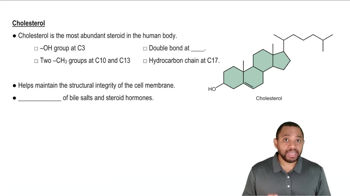
Step 2: Recall the structure of estrogen. Estrogen is a steroid, which means it contains a steroid nucleus. A steroid nucleus is a structure composed of four fused rings (three cyclohexane rings and one cyclopentane ring).
Step 3: Analyze the list of components. From the given list, the component that matches the structure of estrogen is '5. steroid nucleus'.
Step 4: Verify the absence of other components. Estrogen does not contain glycerol, fatty acids, phosphate groups, amino alcohols, or sphingosine. These components are typically found in other types of lipids, such as triglycerides, phospholipids, or sphingolipids.
Step 5: Conclude that the only component present in estrogen from the given list is '5. steroid nucleus'.
Verified video answer for a similar problem:
This video solution was recommended by our tutors as helpful for the problem above
Video duration:
3m
Play a video:
Was this helpful?
Key Concepts
Here are the essential concepts you must grasp in order to answer the question correctly.
Lipids
Lipids are a diverse group of hydrophobic organic molecules that play crucial roles in biological systems. They include fats, oils, phospholipids, and steroids, which are essential for energy storage, cellular structure, and signaling. Understanding the structure and function of different lipids is vital for analyzing their components and roles in biological processes.
Glycerol is a three-carbon alcohol that serves as the backbone for triglycerides and phospholipids, while fatty acids are long hydrocarbon chains that can be saturated or unsaturated. Together, they form the basic structure of many lipids, with glycerol linking to fatty acids through ester bonds. This structure is fundamental for understanding how lipids function in membranes and energy storage.
Steroids are a class of lipids characterized by a core structure of four fused carbon rings, known as the steroid nucleus. This unique structure allows steroids to function as hormones and signaling molecules in the body. Recognizing the components of steroids, such as functional groups attached to the steroid nucleus, is essential for understanding their biological roles and mechanisms of action.