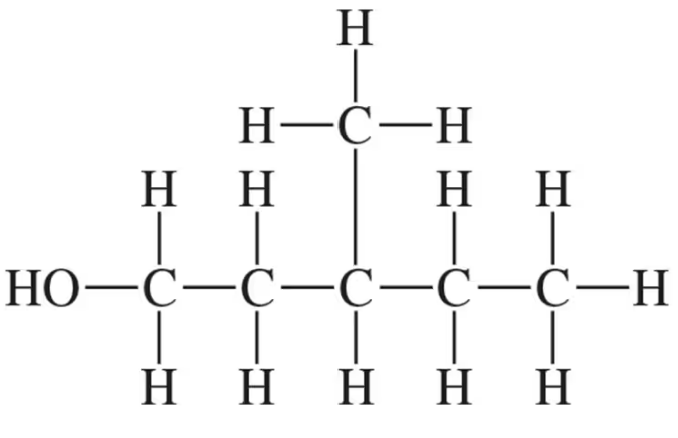
Draw a condensed structure for each of the following compounds: (b)
Verified step by step guidance
1
Analyze the given image of the compound to identify the molecular structure, including the arrangement of atoms and bonds.
Determine the connectivity of atoms in the molecule, focusing on the central chain or backbone and any substituents attached to it.
Write the condensed structural formula by grouping atoms together based on their connectivity. For example, CH₃ groups are written as CH₃, CH₂ groups as CH₂, and so on.
Include any branching or substituents in the condensed structure by placing them in parentheses next to the atom they are attached to. For example, CH₃CH(CH₃)CH₂CH₃ represents a branched chain.
Double-check the condensed structure to ensure it accurately represents the molecular structure shown in the image, including all bonds and substituents.
Verified video answer for a similar problem:
This video solution was recommended by our tutors as helpful for the problem above
Video duration:
2m
Play a video:
Was this helpful?
Key Concepts
Here are the essential concepts you must grasp in order to answer the question correctly.
Condensed Structural Formula
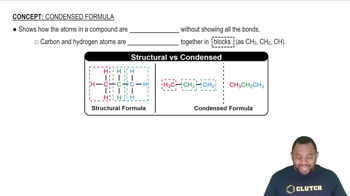
A condensed structural formula is a way of representing a chemical compound that shows the arrangement of atoms and the connectivity between them without depicting all the bonds explicitly. It typically groups atoms together to indicate how they are connected, making it easier to visualize the structure of the molecule in a compact form.
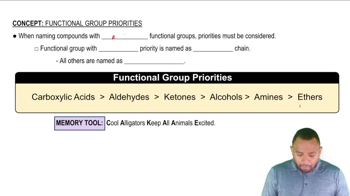
Functional groups are specific groups of atoms within molecules that are responsible for the characteristic chemical reactions of those molecules. Understanding functional groups is essential for drawing condensed structures, as they dictate the reactivity and properties of the compound, influencing how the atoms are arranged in the condensed formula.
Chemical nomenclature is the systematic naming of chemical compounds based on their structure and composition. Familiarity with nomenclature rules is crucial for accurately interpreting the names of compounds and translating them into their corresponding condensed structures, ensuring clarity and consistency in chemical communication.