Determine the relationship between each of the pairs of the following compounds. Are they structural isomers (different molecules), conformational isomers (the same molecule), or not related? (d)
Verified step by step guidance
1
Examine the molecular formulas of both compounds to determine if they have the same number and type of atoms. If the molecular formulas differ, the compounds are not related.
If the molecular formulas are the same, analyze the connectivity of the atoms in each compound. Structural isomers have the same molecular formula but different connectivity of atoms.
If the connectivity is the same, check the spatial arrangement of the atoms. Conformational isomers are the same molecule but differ in their spatial arrangement due to rotation around single bonds.
Compare the two structures carefully to identify whether they are structural isomers, conformational isomers, or not related. Look for differences in bond connectivity or spatial arrangement.
Conclude the relationship between the two compounds based on your analysis: structural isomers, conformational isomers, or not related.
Verified video answer for a similar problem:
This video solution was recommended by our tutors as helpful for the problem above
Video duration:
3m
Play a video:
Was this helpful?
Key Concepts
Here are the essential concepts you must grasp in order to answer the question correctly.
Structural Isomers
Structural isomers are compounds that have the same molecular formula but differ in the arrangement of atoms within the molecule. This can include variations in the connectivity of atoms, leading to different functional groups or chain structures. For example, butane and isobutane both have the formula C4H10 but differ in their structural arrangement.
Conformational isomers, or conformers, are different spatial arrangements of the same molecule that can be interconverted by rotation around single bonds. These isomers do not involve breaking any bonds and typically exist in equilibrium. An example is the staggered and eclipsed forms of ethane, which are different orientations of the same molecular structure.
Isomerism refers to the phenomenon where two or more compounds have the same molecular formula but differ in structure or spatial arrangement. This broad category includes both structural and conformational isomers, highlighting the diversity of chemical compounds. Understanding isomerism is crucial for predicting the properties and reactivity of organic molecules.


 3:29 minutes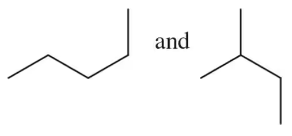
 Verified step by step guidance
 2:16
2:16