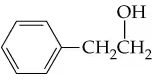
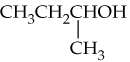
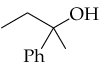
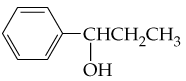
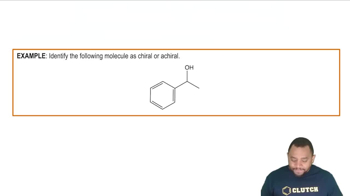
Which of the alcohols pictured in Problem 14.48 are chiral? Indicate the chiral carbons for those that are chiral. a. b. c. 2,3-Pentanediol d. e. f.
Verified step by step guidance
1
Step 1: Recall the definition of chirality. A molecule is chiral if it has a carbon atom bonded to four different groups, and it lacks a plane of symmetry.
Step 2: Examine each alcohol structure provided in Problem 14.48. Identify all carbon atoms in each molecule and check if any carbon is bonded to four distinct groups.
Step 3: For each molecule, determine if the identified carbon atoms meet the criteria for chirality. If a carbon atom is bonded to four different groups, it is a chiral center.
Step 4: Mark the chiral carbons in the molecules that are chiral. Use a clear notation or highlight the specific carbon atoms in the structure.
Step 5: Summarize which alcohols are chiral and list their chiral carbons. Ensure the reasoning is consistent with the definition of chirality.
Verified video answer for a similar problem:
This video solution was recommended by our tutors as helpful for the problem above
Play a video:
Was this helpful?
Key Concepts
Here are the essential concepts you must grasp in order to answer the question correctly.
Chirality
Chirality refers to the geometric property of a molecule that makes it non-superimposable on its mirror image. A chiral molecule typically has at least one carbon atom bonded to four different substituents, creating two distinct forms known as enantiomers. Understanding chirality is crucial in organic chemistry, especially in the context of stereochemistry and its implications in biological systems.
A chiral carbon, also known as a stereocenter, is a carbon atom that is attached to four different groups or atoms. The presence of a chiral carbon in a molecule indicates that the molecule can exist in two enantiomeric forms. Identifying chiral carbons is essential for determining the chirality of a compound and understanding its potential interactions in biological systems.
Stereochemistry is the branch of chemistry that deals with the spatial arrangement of atoms in molecules and how this arrangement affects their chemical properties and reactions. It encompasses concepts such as chirality, enantiomers, and diastereomers. A solid grasp of stereochemistry is vital for predicting the behavior of molecules in chemical reactions and their interactions in biological contexts.