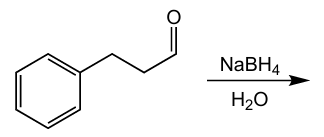
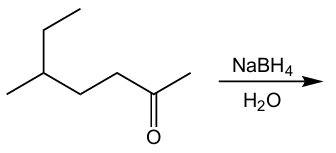
Reduction reactions involving alcohols are essential in organic chemistry, particularly when discussing the transformation of aldehydes and ketones into alcohols. A common reducing agent used in these reactions is sodium borohydride, represented as NaBH4, which is typically dissolved in water. The role of a reducing agent is to facilitate the reduction process by donating electrons, thereby reducing the oxidation state of the carbonyl compounds.
During the reduction of a carbonyl group, the carbonyl oxygen gains a hydrogen atom (H), and the carbonyl carbon also receives an H. This process results in the formation of carbon-hydrogen (C-H) bonds. Specifically, when an aldehyde or ketone is reduced, the carbonyl carbon is transformed into a saturated carbon atom, while the carbonyl oxygen becomes an alcohol functional group.
To visualize this transformation, consider the following steps: first, identify the carbonyl carbon in the aldehyde or ketone. Next, add an H atom to this carbon, which necessitates the removal of one of the pi bonds (π bonds) associated with the carbonyl group, as carbon can only form four bonds. Simultaneously, the carbonyl oxygen, which typically forms two bonds, gains an H atom to maintain its valency. This results in the conversion of the carbonyl compound into an alcohol.
In summary, the reduction of aldehydes and ketones involves the addition of hydrogen atoms to both the carbonyl carbon and oxygen, effectively transforming these compounds into alcohols by eliminating the pi bond in the process. Understanding this mechanism is crucial for mastering organic reduction reactions.