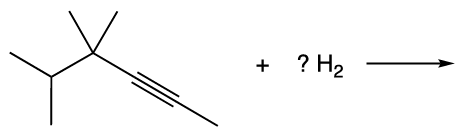
Alkenes and alkynes are known to undergo addition reactions, which involve the addition of atoms to pi bonds, leading to the breaking of double or triple bonds. In these reactions, pi bonds are broken, and new sigma bonds are formed. There are three primary types of addition reactions: halogenation, hydrogenation, and hydrohalogenation.
Halogenation involves the addition of halogens to the pi bonds of alkenes. For instance, when an alkene with two carbon atoms is treated with halogens, one of the pi bonds is broken, allowing the halogens to attach to the carbon atoms, resulting in a compound known as a dihalide.
Hydrogenation, on the other hand, is the process of adding hydrogen atoms to the pi bond of an alkene. This reaction transforms the alkene into an alkane, as the addition of hydrogen saturates the molecule, maintaining the other hydrogen atoms already present.
Hydrohalogenation is slightly different, as it involves the addition of a hydrogen atom and a halogen atom (HX, where X can be bromine or chlorine) to the double bond. This reaction produces an alkyl halide. The specific distribution of hydrogen and halogen across the double-bonded carbons will be determined by certain rules that will be explored later.
It is important to note that one mole of reagent is required for each pi bond present. For example, a triple bond, which contains two pi bonds, would necessitate two moles of reagent, while an alkene with a single pi bond requires only one mole. A double bond consists of one sigma bond and one pi bond, while a triple bond comprises one sigma bond and two pi bonds. The sigma bond remains constant, with the number of pi bonds varying based on the type of bond present.
In summary, these three types of addition reactions—halogenation, hydrogenation, and hydrohalogenation—are fundamental processes that occur in alkenes and alkynes, facilitating the transformation of these unsaturated hydrocarbons into more saturated forms.