Esters are organic compounds characterized by the presence of an oxygen atom bonded to an alkyl group and a carbon chain that includes a carbonyl group (C=O). This structure is essential in defining esters and differentiating them from other organic compounds.
When it comes to naming esters, a specific convention is followed. The carbon chain that contains the carbonyl group is named similarly to a carboxylic acid, but with a crucial modification: the suffix changes from "oic acid" to "oate." This alteration signifies that the compound is now an ester rather than a carboxylic acid.
In the naming process, the longest carbon chain is identified as the parent chain, and any substituents attached to this chain are also considered. The final name of the ester will reflect both the parent chain and the substituents, ensuring clarity in its identification. For example, if the parent chain is derived from acetic acid, the ester would be named acetate. Understanding this naming convention is vital for accurately identifying and communicating about esters in organic chemistry.
16. Carboxylic Acids and Their Derivatives
Naming Esters
16. Carboxylic Acids and Their Derivatives
Naming Esters: Videos & Practice Problems
Topic summary
Naming Esters focuses on recognizing the two parts of an ester: an alkyl group attached to the oxygen and a carbon chain that contains the carbonyl group. The alkyl group connected to oxygen is written first and treated like a substituent, with no number needed for its position. The carbonyl-containing chain is named like a carboxylic acid, but the ending changes from oic acid to oate.
For systematic names, start counting the parent chain at the carbonyl carbon, which is carbon 1, then identify and number any substituents on that chain. Identical substituents use prefixes such as di-, tri-, and tetra-, and substituent names are written in alphabetical order. Commas separate numbers from numbers, and dashes separate numbers from letters, while the alkyl group name is separated from the rest of the ester name by a space.
For common names, the same overall ester pattern is used, but the parent chain uses common acid-derived names with the ate ending, such as valerate or benzoate. This makes it easier to interpret names like phenyl, tert-butyl, isopropyl, or cyclopentyl esters by identifying which group is attached to oxygen and which part belongs to the carbonyl chain.
0
Concept
IUPAC Rules for Naming Esters Concept 1

Video duration:
59sIUPAC Rules for Naming Esters Concept 1 Video Summary
Study Smarter with Worksheets.
Follow along with each video using our printable worksheets

0
Example
IUPAC Rules for Naming Esters Example 1
Video duration:
3mIUPAC Rules for Naming Esters Example 1 Video Summary
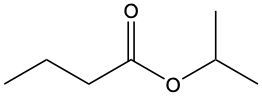
To systematically name an ester, we follow a structured approach that involves identifying the alkyl group and the carbonyl chain. First, we determine the alkyl group connected to the oxygen atom. In this case, the alkyl group consists of two carbon atoms, which is named ethyl.
Next, we identify the carbonyl group, which is the functional group characteristic of esters. The carbon chain connected to the carbonyl group is then assessed for its length. Starting from the carbonyl carbon, we number the chain: 1, 2, 3, 4. The carbonyl carbon is considered carbon number one.
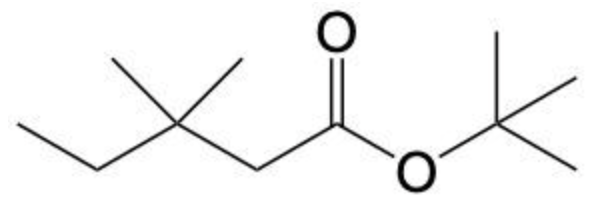
We also need to identify any substituents on the carbon chain. In this example, there is a methyl group located on carbon number three. When there are multiple identical substituents, we use prefixes such as 'di' for two, 'tri' for three, and 'tetra' for four. Here, we only have one methyl group.
When naming the substituents, we list them in alphabetical order, disregarding any numerical prefixes. We separate numbers with commas and use dashes to separate letters from numbers, while letters are not separated from each other. Additionally, the alkyl group name connected to the oxygen is written with spaces.
Putting this all together, we start with the alkyl group, which is ethyl (written with spaces). Next, we note the methyl substituent on carbon number three, leading to '3-methyl'. The carbon chain is a four-carbon chain, which corresponds to butanoic acid. However, since we are naming an ester, we replace the 'ic acid' suffix with 'ate', resulting in butanoate.
Thus, the complete systematic name for this ester is ethyl 3-methyl butanoate.
0
Problem
Provide the systematic name for the following ester.
A
propyl butanoate
B
butyl propanoate
C
isopropyl butanoate
D
isobutyl propanoate
0
Problem
Provide the systematic name for the following ester.
A
tert-butyl 3,3-dimethylpentanoate
B
sec-butyl 3,3-dimethylpentanoate
C
tert-butyl 4,4-dimethylpentanoate
D
isopropyl 3,3-dimethylpentanoate
0
Problem
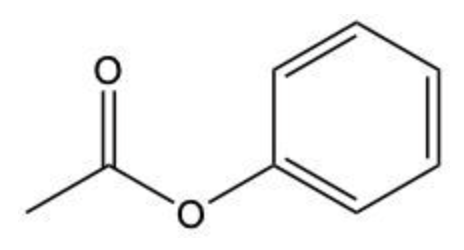
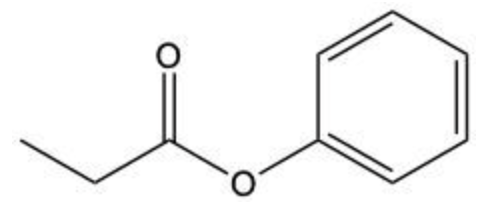
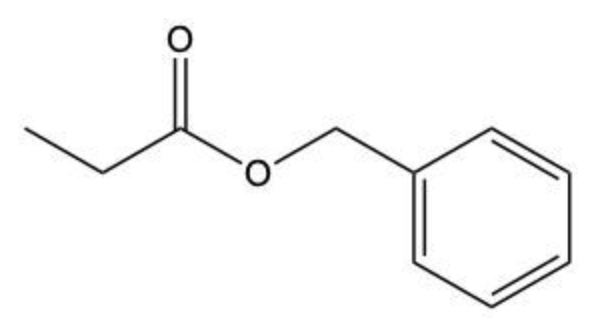
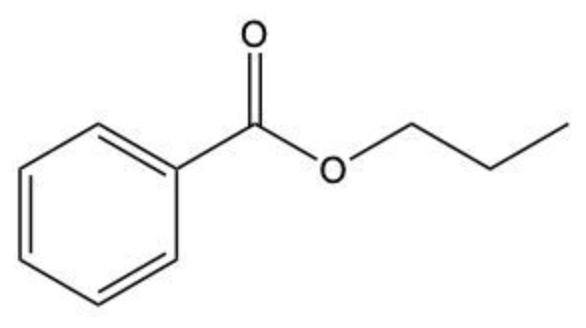
If the substituent name of benzene is phenyl, which structure represents phenyl propanoate?
A
B
C
D
0
Concept
Common Naming: Esters Concept 2
Video duration:
3mCommon Naming: Esters Concept 2 Video Summary
Esters are organic compounds formed from the reaction of an alcohol and a carboxylic acid, and their naming follows specific conventions. When using common names for esters, the naming structure consists of the substituent, prefix, and modifier, with the parent chain typically ending in "ate." To illustrate this, let’s break down the naming process step by step.
First, identify the alkyl group connected to the oxygen atom of the ester. For example, if there is a three-carbon chain attached to the oxygen, it is referred to as "propyl." This alkyl group is named as a substituent and is placed at the beginning of the ester name without a numerical location, as it is directly attached to the oxygen rather than a carbon atom.
Next, determine the length of the carbon chain that includes the carbonyl group (C=O). The carbonyl carbon is considered carbon number one. For instance, if there are five carbons in the chain, the prefix used is "valer," and since it is an ester, the name will end with "ate," resulting in "valerate."
When naming the ester, if there are additional substituents, assign numbers to indicate their positions on the carbon chain. For example, if there is an isopropyl group attached to carbon number two, it is named "2-isopropyl." When multiple identical substituents are present, use prefixes such as "di" for two, "tri" for three, and "tetra" for four. Importantly, all substituents should be listed in alphabetical order, while the numerical prefixes do not count towards this order.
In the final name, ensure to use commas to separate numbers from numbers and dashes to separate letters from numbers. For example, if the alkyl group is propyl and the main chain is 2-isopropyl valerate, the complete name would be "propyl 2-isopropyl valerate." This structure clearly indicates the connection of the propyl group to the oxygen of the ester and the isopropyl substituent's position on the carbon chain.
By following these conventions, one can accurately name esters using common naming systems, ensuring clarity and consistency in chemical communication.
0
Problem
Provide common name for given compound.
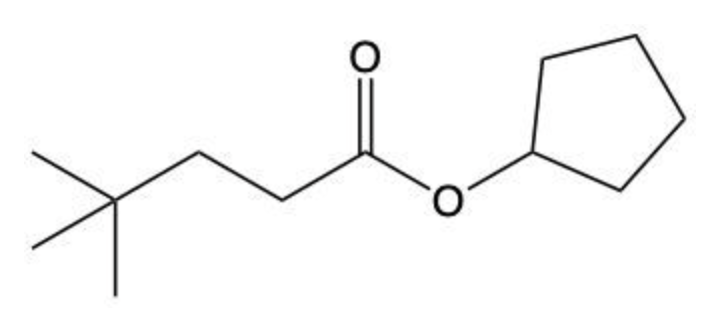
A
cyclopentyl-4,4,4-trimethyl valerate
B
cyclopentyl-4,4,4-trimethyl butyrate
C
cyclopentyl-4,4-dimethyl valerate
D
cyclopentyl-4,4-trimethyl butyrate
0
Problem
Give a common name for the following compound.
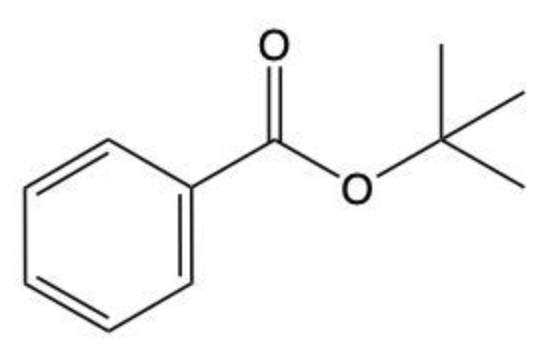
A
tert-butyl benzoic acid
B
butyl benzoate
C
tert-butyl benzoate
D
sec-butyl benzoate
0
Problem
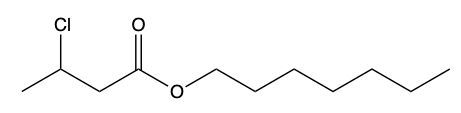
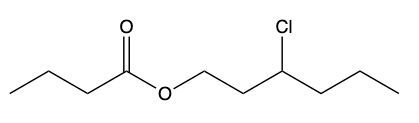
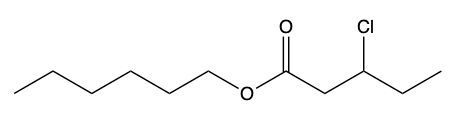
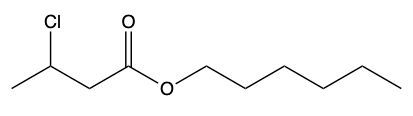
Draw structure for given name: hexyl 3-chlorobutyrate.
A
B
C
D
Do you want more practice?
More sets
Go over this topic definitions with flashcards
More setsHere's what students ask on this topic:
To name an ester using the IUPAC system, first identify the alkyl group attached to the oxygen atom; this group is named as a substituent and placed at the beginning of the name without a number since it is bonded directly to oxygen. Next, identify the carbon chain containing the carbonyl group, which is considered the parent chain. Numbering starts at the carbonyl carbon, which is carbon 1. Name this chain as if it were a carboxylic acid but change the suffix from to . If there are substituents on the parent chain, assign numbers to their positions, use prefixes like di-, tri-, tetra- for multiple identical substituents, and list substituents alphabetically (ignoring prefixes). Use commas to separate numbers and dashes to separate numbers from letters. Finally, write the alkyl group name followed by a space and then the modified parent chain name.
Common naming of esters follows a similar pattern to systematic naming but uses common acid prefixes for the parent chain instead of the IUPAC acid names. The alkyl group attached to oxygen is named first as a substituent without a number. The carbonyl-containing chain is named using common acid names with the ending changed to , such as valerate or butyrate. In contrast, systematic naming uses the full IUPAC acid name modified to end with . Both methods number the carbonyl carbon as 1 and assign numbers to substituents on the parent chain. The key difference is the use of common acid names in common naming versus full IUPAC names in systematic naming.
No number is given for the alkyl group attached to the oxygen in ester names because this group is bonded directly to the oxygen atom, not to a carbon in the parent chain. Since the oxygen is not part of the carbon chain that contains the carbonyl group, the position of the alkyl group is implied and does not require numbering. This simplifies the name and clearly distinguishes the alkyl substituent attached to oxygen from substituents on the carbonyl-containing chain.
When multiple identical substituents are present on the carbonyl-containing chain of an ester, use prefixes such as di- for two, tri- for three, and tetra- for four identical groups. Assign numbers to each substituent's position on the parent chain, separate numbers with commas, and separate numbers from letters with dashes. List all substituents in alphabetical order, ignoring the prefixes when alphabetizing. This systematic approach ensures clarity and consistency in naming complex esters with multiple substituents.
When an ester has an isopropyl substituent attached to the carbonyl-containing chain, first identify the position of the isopropyl group by numbering the carbon chain starting at the carbonyl carbon as 1. For example, if the isopropyl group is on carbon 2, include this number before the substituent name. Write the alkyl group attached to oxygen first, followed by a space, then the position number and the substituent name, and finally the parent chain name ending with . For instance, if the alkyl group on oxygen is propyl and the parent chain is valerate with an isopropyl on carbon 2, the name would be propyl 2-isopropyl valerate. Use commas to separate numbers and dashes to separate numbers from letters.