Join thousands of students who trust us to help them ace their exams!
Multiple Choice
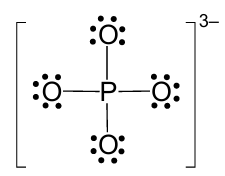
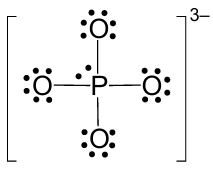
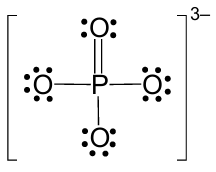
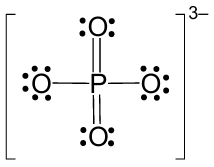
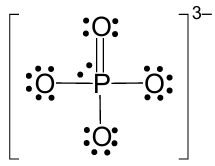
Which of the following phosphate, PO43- Lewis structures is the best, most valid resonance structure?
A
B
C
D
E
2 Comments
Verified step by step guidance
1
Step 1: Count the total number of valence electrons for the phosphate ion, PO\_4^{3-}. Phosphorus (P) has 5 valence electrons, each oxygen (O) has 6 valence electrons, and the 3- charge adds 3 extra electrons. So, total valence electrons = 5 + (4 × 6) + 3 = 32 electrons.
Step 2: Draw the basic Lewis structure with phosphorus as the central atom bonded to four oxygen atoms. Initially, connect each oxygen to phosphorus with a single bond, and distribute the remaining electrons to satisfy the octet rule for each atom.
Step 3: Evaluate each resonance structure by checking the formal charges on each atom. The formal charge is calculated using the formula: \(\text{Formal Charge} = \text{Valence Electrons} - \text{Nonbonding Electrons} - \frac{1}{2} \times \text{Bonding Electrons}\). The best resonance structure minimizes formal charges, especially on the central atom.
Step 4: Identify resonance structures where phosphorus has an expanded octet (more than 8 electrons) by forming double bonds with oxygen atoms. This can reduce formal charges on oxygen atoms and phosphorus, leading to a more stable structure.
Step 5: Select the resonance structure with the lowest overall formal charges and where negative charges are placed on the more electronegative atoms (oxygen). This structure is the most valid resonance form of the phosphate ion.





 Verified step by step guidance

