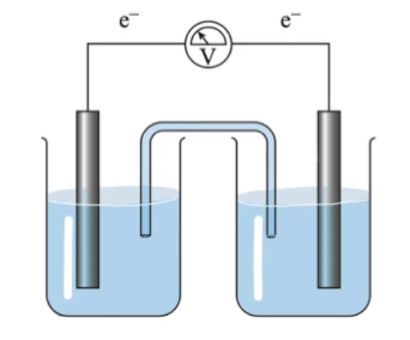
In a redox reaction involving a salt bridge, understanding the flow of ions is crucial for determining the behavior of the electrochemical cells. In this scenario, we have magnesium and cadmium as the two half cells. The magnesium half cell undergoes oxidation, where magnesium transitions from an oxidation state of 0 to +2, indicating that it loses electrons. This process occurs at the anode, which is the site of oxidation.
Conversely, cadmium experiences reduction, moving from an oxidation state of +2 to 0, where it gains electrons. This reduction takes place at the cathode. The salt bridge plays a vital role in maintaining electrical neutrality by allowing the flow of ions between the two half cells. In this case, negatively charged bromide ions will migrate towards the anode (magnesium half cell), while positively charged sodium ions will flow towards the cathode (cadmium half cell).
Thus, the correct understanding is that bromide ions flow to the magnesium half cell, confirming that the magnesium compartment is indeed the anode. Meanwhile, sodium ions should flow towards the cadmium half cell, which serves as the cathode. Therefore, the statement regarding the flow of bromide ions to the magnesium side is true, while the assertion about sodium ions flowing to the magnesium half cell is incorrect, as they should flow to the cadmium side.