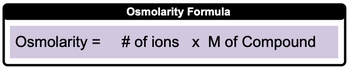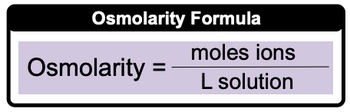

To calculate the molarity of chloride ions when dissolving 58.1 grams of aluminum chloride (AlCl3) in enough water to make 500 mL of solution, we first need to convert the volume from milliliters to liters. Since 1 mL is equal to 10-3 liters, 500 mL converts to 0.500 liters.
Next, we determine the number of moles of aluminum chloride. The molar mass of aluminum chloride can be calculated using the atomic masses from the periodic table: aluminum (Al) has an atomic mass of 26.98 g/mol, and chlorine (Cl) has an atomic mass of 35.45 g/mol. The formula for aluminum chloride consists of 1 aluminum atom and 3 chlorine atoms, leading to the following calculation for its molar mass:
\[\text{Molar mass of AlCl}_3 = 26.98 \, \text{g/mol} + (3 \times 35.45 \, \text{g/mol}) = 133.33 \, \text{g/mol}\]
Now, we convert the mass of aluminum chloride to moles:
\[\text{Moles of AlCl}_3 = \frac{58.1 \, \text{g}}{133.33 \, \text{g/mol}} \approx 0.435 \, \text{moles}\]
Since each mole of aluminum chloride produces 3 moles of chloride ions, we can calculate the moles of chloride ions:
\[\text{Moles of Cl}^- = 0.435 \, \text{moles of AlCl}_3 \times 3 = 1.305 \, \text{moles of Cl}^-\]
Now, we can find the molarity of chloride ions using the formula for molarity, which is the number of moles of solute divided by the volume of solution in liters:
\[\text{Molarity (M)} = \frac{\text{Moles of Cl}^-}{\text{Volume in liters}} = \frac{1.305 \, \text{moles}}{0.500 \, \text{liters}} = 2.61 \, \text{M}\]
Thus, the molarity of chloride ions in the solution is approximately 2.61 M. This value is expressed with three significant figures, consistent with the precision of the given data.