Textbook Question
Suggest a method for synthesizing the following alkynes using an alkyne and an alkyl halide. [There are two correct answers for each product.]
(c)
867
views

 Mullins 1st EditionCh. 10 - Alkynes: Electrophilic Addition and Redox ReactionsProblem 49b
 Verified step by step guidance
 02:47
02:47
 02:36
02:36 2:13
2:13Suggest a method for synthesizing the following alkynes using an alkyne and an alkyl halide. [There are two correct answers for each product.]
(c)
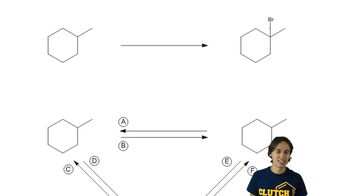
Beginning with the molecules on the left, provide a synthesis of the molecule on the right. The ideal number of steps is indicated over the reaction arrow, although there may be alternate routes worth considering.
(b)
Synthesize the following molecules beginning with only organic molecules containing three carbons or fewer.
(g)
Synthesize the following molecules beginning with only organic molecules containing three carbons or fewer.
(e)
Synthesize the following molecules beginning with only organic molecules containing three carbons or fewer.
(f)
Beginning with the molecules on the left, provide a synthesis of the molecule on the right. The ideal number of steps is indicated over the reaction arrow, although there may be alternate routes worth considering.
(a)