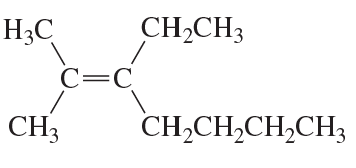
Step 1: Analyze compound (i). Identify the longest carbon chain containing the double bond. The parent chain has 5 carbons, making it a pentene. Number the chain starting from the end closest to the double bond. The substituents are two methyl groups and one propyl group. Assign their positions based on the numbering.
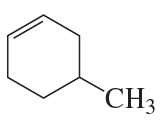
Step 2: For compound (ii), recognize the cyclic structure with a double bond. The parent chain is a cyclopentene. Number the ring starting from the double bond to give the substituent (methyl group) the lowest possible number. Assign the position of the methyl group.
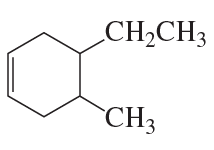
Step 3: Examine compound (iii). It is a cyclohexene with two substituents: an ethyl group and a methyl group. Number the ring starting from the double bond to give the substituents the lowest possible numbers. Assign the positions of the ethyl and methyl groups.
Step 4: Apply IUPAC naming rules to each compound. Combine the parent chain name, the position of the double bond, and the substituents with their positions to form the systematic name for each compound.
Step 5: Double-check the names to ensure they follow IUPAC conventions, including correct numbering and alphabetical order for substituents.
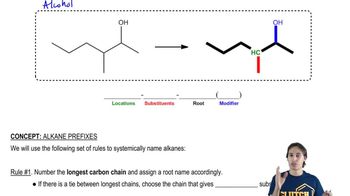
Verified video answer for a similar problem:
This video solution was recommended by our tutors as helpful for the problem above
Video duration:
6m
Play a video:
Was this helpful?
Key Concepts
Here are the essential concepts you must grasp in order to answer the question correctly.
Systematic Naming
Systematic naming in organic chemistry, also known as IUPAC nomenclature, provides a standardized method for naming chemical compounds. It involves identifying the longest carbon chain, determining the functional groups, and assigning locants to indicate the position of substituents. This systematic approach ensures that each compound has a unique name that conveys its structure.
Alkenes are hydrocarbons that contain at least one carbon-carbon double bond (C=C). They are unsaturated compounds, meaning they have fewer hydrogen atoms than alkanes with the same number of carbon atoms. The presence of the double bond affects the compound's reactivity and physical properties, making it essential to recognize when naming these compounds.
Substituents are atoms or groups of atoms that replace hydrogen atoms in a hydrocarbon chain. When naming compounds, it is crucial to identify these substituents and their positions on the main carbon chain. The position is indicated by numbers assigned to the carbon atoms, ensuring clarity in the compound's structure and aiding in the systematic naming process.