
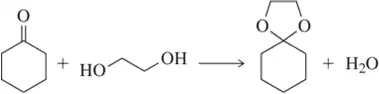
For each of the following reactions, identify the bonds that are broken and formed. Be sure to indicate whether the bond that is broken is a σ bond or a π bond. (e)
Verified step by step guidance
1
Examine the given reaction and identify the reactants and products. Look for changes in the connectivity of atoms to determine which bonds are broken and which are formed.
For each bond broken, determine whether it is a σ (sigma) bond or a π (pi) bond. Recall that σ bonds are single bonds formed by head-on overlap of orbitals, while π bonds are formed by the side-by-side overlap of p orbitals in double or triple bonds.
For each bond formed, similarly determine whether it is a σ bond or a π bond. New single bonds are σ bonds, while additional bonds in double or triple bonds are π bonds.
Write down the specific bonds broken and formed, including the atoms involved. For example, if a C=C double bond is converted to a C-C single bond, note that one π bond is broken and one σ bond remains.
Summarize the changes in bonding, clearly indicating the type of bonds (σ or π) that are broken and formed during the reaction.
Verified video answer for a similar problem:
This video solution was recommended by our tutors as helpful for the problem above
Video duration:
13m
Play a video:
Was this helpful?
Key Concepts
Here are the essential concepts you must grasp in order to answer the question correctly.
Types of Chemical Bonds
Chemical bonds can be classified into sigma (σ) and pi (π) bonds. Sigma bonds are formed by the head-on overlap of atomic orbitals, allowing for free rotation around the bond axis. In contrast, pi bonds result from the side-to-side overlap of p orbitals and restrict rotation. Understanding these bond types is crucial for analyzing reaction mechanisms and predicting the stability of intermediates.
Chemical Reactions of Phosphate Anhydrides Concept 1
Bond Breaking and Formation
In a chemical reaction, bonds in the reactants must break to allow for the formation of new bonds in the products. The process of bond breaking requires energy input, while bond formation releases energy. Identifying which bonds are broken and formed helps in understanding the overall energy changes and the reaction's feasibility.
A reaction mechanism describes the step-by-step sequence of elementary reactions that occur during a chemical transformation. Each step involves specific bonds being broken and formed, which can be influenced by factors such as sterics and electronics. Analyzing the mechanism provides insight into the rate and outcome of the reaction, making it essential for predicting product formation.