Name the following carboxylic acid derivatives, giving both a common name and an IUPAC name where possible. (o) (p)
Verified step by step guidance
1
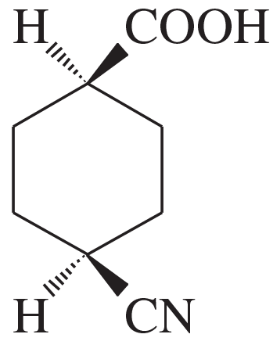
Step 1: Analyze the first structure (o). The molecule contains a cyclohexane ring with two substituents: a carboxylic acid group (-COOH) and a nitrile group (-CN). Both substituents are attached to the ring at different positions and are in a trans configuration (opposite sides of the ring).
Step 2: Determine the IUPAC name for the first structure (o). The carboxylic acid group takes priority in naming due to its higher precedence in functional group hierarchy. Number the ring starting from the carbon attached to the carboxylic acid group, ensuring the nitrile group gets the lowest possible number. The name will include 'cyclohexane' as the parent chain, with 'carboxylic acid' and 'nitrile' as substituents.
Step 3: Assign the common name for the first structure (o). Common names often use simpler naming conventions. For example, the carboxylic acid group might be referred to as 'cyclohexanecarboxylic acid,' and the nitrile group as 'cyclohexanenitrile.'
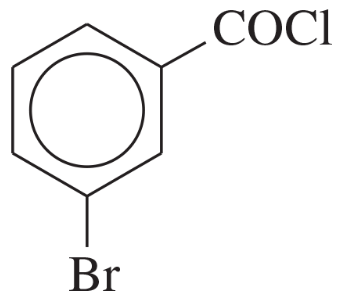
Step 4: Analyze the second structure (p). The molecule contains a benzene ring with two substituents: a bromine atom (-Br) and an acyl chloride group (-COCl). The acyl chloride group is attached directly to the benzene ring, and the bromine atom is positioned at a different location.
Step 5: Determine the IUPAC and common names for the second structure (p). For the IUPAC name, the acyl chloride group takes priority, and the bromine atom is treated as a substituent. Number the benzene ring starting from the carbon attached to the acyl chloride group, ensuring the bromine atom gets the lowest possible number. The name will include 'benzoyl chloride' for the acyl chloride group and 'bromo' for the bromine substituent. The common name might simply refer to the molecule as 'bromobenzoyl chloride.'
Verified video answer for a similar problem:
This video solution was recommended by our tutors as helpful for the problem above
Video duration:
4m
Play a video:
Was this helpful?
Key Concepts
Here are the essential concepts you must grasp in order to answer the question correctly.
Carboxylic Acids
Carboxylic acids are organic compounds characterized by the presence of one or more carboxyl groups (-COOH). They are known for their acidic properties due to the ability of the carboxyl group to donate a proton (H+). Common examples include acetic acid and benzoic acid. Understanding their structure and reactivity is essential for naming derivatives.
Carboxylic acid derivatives are compounds that can be derived from carboxylic acids by replacing the hydroxyl group (-OH) with another functional group. Common derivatives include esters, amides, and acyl chlorides. Each derivative has distinct properties and reactivity patterns, which are crucial for proper naming and understanding their chemical behavior.
IUPAC nomenclature is a systematic method for naming organic chemical compounds. It provides rules for naming based on the structure of the molecule, including the longest carbon chain, functional groups, and substituents. Familiarity with IUPAC rules is essential for accurately naming carboxylic acid derivatives and understanding their relationships to parent compounds.