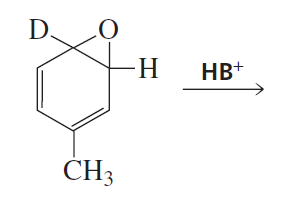
The existence of the NIH shift was established by determining the major product obtained from rearrangement of the following arene oxide, in which a hydrogen has been replaced by a deuterium. a. What would be the major product if the NIH shift occurs? (Hint: A C—H bond is easier to break than a C—D bond.)
Verified step by step guidance
1
Step 1: Analyze the structure of the arene oxide provided in the image. The molecule contains a deuterium (D) atom and a hydrogen (H) atom attached to the same carbon adjacent to the epoxide group. The epoxide group is highly reactive and prone to rearrangement under acidic conditions (HB⁺).
Step 2: Understand the NIH shift mechanism. The NIH shift involves the migration of a hydrogen (or deuterium) atom during the rearrangement of the arene oxide. This occurs due to the breaking of the C-H or C-D bond and subsequent reattachment to a neighboring carbon atom.
Step 3: Consider the bond strength of C-H versus C-D. The C-H bond is easier to break than the C-D bond because the C-D bond is stronger due to the heavier mass of deuterium. This means the hydrogen atom is more likely to migrate during the NIH shift.
Step 4: Predict the rearrangement product. During the NIH shift, the hydrogen atom (H) migrates to the neighboring carbon atom, while the deuterium (D) remains in its original position. This results in the formation of a rearranged product where the hydrogen is now attached to a different carbon.
Step 5: Verify the major product. The major product will have the hydrogen atom relocated to the neighboring carbon, while the deuterium remains unchanged. This rearrangement stabilizes the molecule and completes the NIH shift process.
Verified video answer for a similar problem:
This video solution was recommended by our tutors as helpful for the problem above
Video duration:
5m
Play a video:
Was this helpful?
Key Concepts
Here are the essential concepts you must grasp in order to answer the question correctly.
NIH Shift
The NIH shift refers to a specific rearrangement mechanism in organic chemistry where a hydrogen atom is replaced by a deuterium atom during the reaction. This shift is significant in understanding the behavior of arene oxides, as it illustrates how the stability of intermediates can influence the final product. The NIH shift is particularly relevant when considering the bond strengths of C—H versus C—D bonds, as the latter is generally stronger.
Arene oxides are reactive intermediates formed from the oxidation of aromatic compounds. They are characterized by an epoxide-like structure where an oxygen atom is bonded to a carbon atom in the aromatic ring. Understanding the reactivity of arene oxides is crucial for predicting the outcomes of various organic reactions, including rearrangements like the NIH shift, as they can lead to different products based on the stability of the resulting structures.
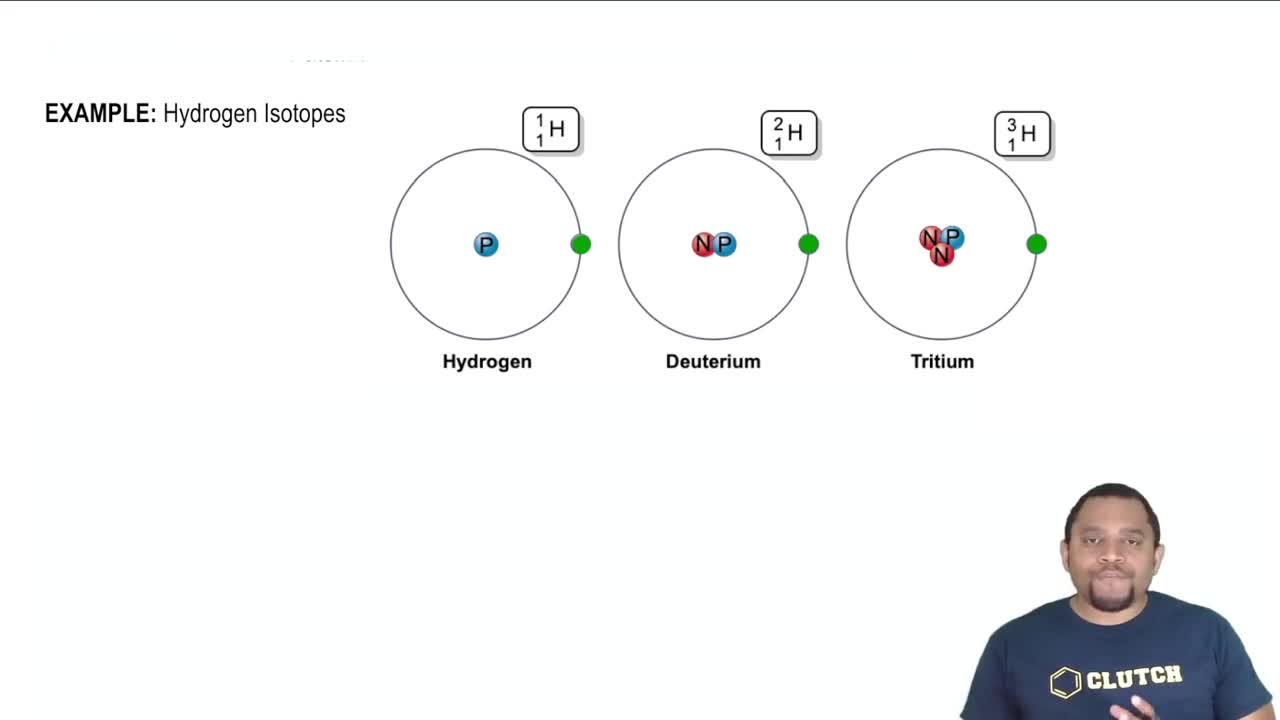
Isotope effects refer to the differences in reaction rates or mechanisms that occur when isotopes of an element are substituted in a molecule. In this context, the presence of deuterium (D) instead of hydrogen (H) affects the bond strength, making C—D bonds stronger and less likely to break compared to C—H bonds. This concept is essential for predicting the major product of the NIH shift, as it influences which bond will break during the rearrangement process.