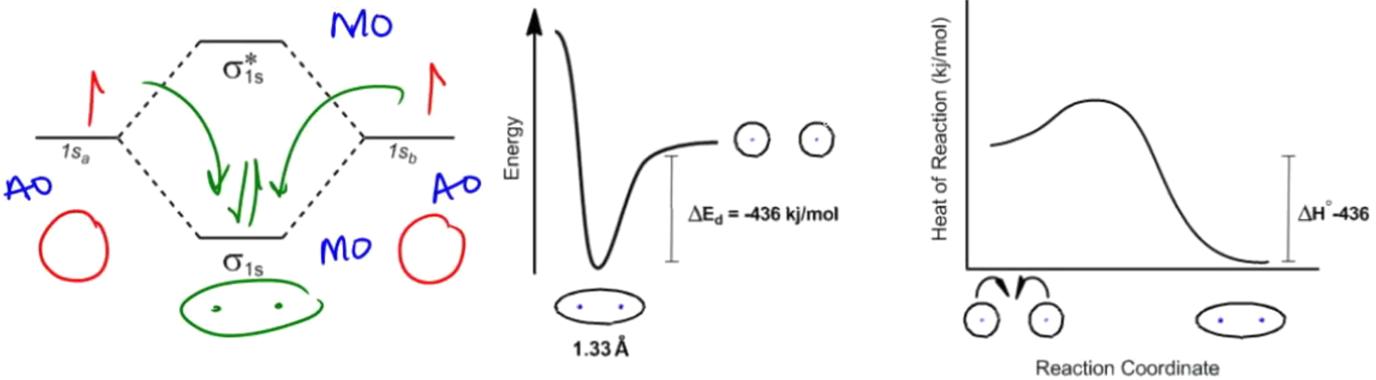

In chemical reactions, understanding the energy dynamics is crucial for predicting whether a reaction will occur spontaneously. The key concept here is the change in Gibbs free energy, denoted as ΔG. When analyzing a reaction, we compare the energy levels of the reactants and products. If the energy level decreases after the reaction, it indicates that energy is being released, resulting in a negative ΔG value. This type of reaction is termed exergonic, meaning that the system releases energy into the surroundings, making it favorable for the reaction to proceed spontaneously.
Conversely, if the energy level increases, the reaction requires an input of energy, leading to a positive ΔG value. This is referred to as an endergonic reaction, where energy must be supplied to drive the reaction forward.
Additionally, the rate of a reaction is influenced by the activation energy, which is the energy barrier that must be overcome for the reaction to occur. A reaction with low activation energy will proceed more quickly, while one with high activation energy will be slower. In a free energy diagram, an exergonic reaction with a low activation energy would be represented by a steep drop in energy, indicating a fast reaction rate.
In summary, recognizing whether a reaction is exergonic or endergonic based on the Gibbs free energy change is essential for understanding its spontaneity and the energy requirements involved. The activation energy further influences how quickly the reaction can occur, highlighting the interplay between energy changes and reaction kinetics.