Textbook Question
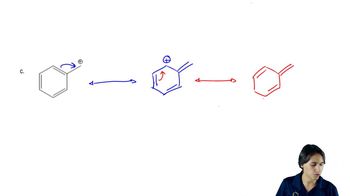
Draw resonance contributors for each of the following species and rank them in order of decreasing contribution to the resonance hybrid. Then draw the resonance hybrid.
e.
949
views

 Bruice 8th EditionCh. 8 - Delocalized Electrons: Their Effect on Stability, pKa, and the Products of a Reaction • Aromaticity and Electronic Effects: An Introduction to the Reactions of BenzeneProblem 6c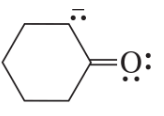
 Verified step by step guidance
 03:04
03:04
 03:24 03:24
Draw resonance contributors for each of the following species and rank them in order of decreasing contribution to the resonance hybrid. Then draw the resonance hybrid.
e.
Draw resonance contributors for each of the following species and rank them in order of decreasing contribution to the resonance hybrid. Then draw the resonance hybrid.
b.
Which species in each pair is more stable?
c.
Draw resonance contributors for each of the following species and rank them in order of decreasing contribution to the resonance hybrid. Then draw the resonance hybrid.
f.
Draw resonance contributors for each of the following species and rank them in order of decreasing contribution to the resonance hybrid. Then draw the resonance hybrid.
d.
Which species in each pair is more stable?
d.