Textbook Question
Name the following benzene derivatives using ortho, meta, and para to identify the relative position of substituents.
(a)
526
views

 Mullins 1st EditionCh. 23 - Benzene 1: Aromatic Stability and Substitution ReactionsProblem 25c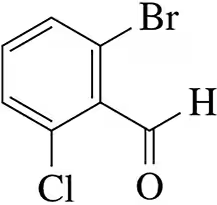
 Verified step by step guidance
 02:49
02:49
 03:43
03:43 2:02
2:02Name the following benzene derivatives using ortho, meta, and para to identify the relative position of substituents.
(a)
An incomplete Frost diagram for a seven-membered ring is shown. Include the necessary electrons to make it represent an aromatic molecule. Then the draw the structure to which it would correspond.
Draw a Frost circle for the cyclopropenyl anion and compare it to the Frost circle for the cyclopropenyl cation. What has changed?
Draw a Frost circle for the cyclopentadienyl cation and compare it to the Frost circle for the cyclopentadienyl anion. What has changed?
The zwitterionic form of carbonyls is often used to explain their electrophilicity. Draw the zwitterionic structure of NO+2. Why is this such a great electrophile at the central nitrogen?
Convert the given name into the corresponding IUPAC name.
(b)