
Textbook Question
Draw a structure for each compound (includes old and new names).
a. 3-methylpent-1-ene
b. cis-3-methyl-3-hexene
c. 3,4-dibromobut-1-ene
1040
views

 Verified step by step guidance
 08:09
08:09
 05:58
05:58 01:23
01:23Draw a structure for each compound (includes old and new names).
a. 3-methylpent-1-ene
b. cis-3-methyl-3-hexene
c. 3,4-dibromobut-1-ene
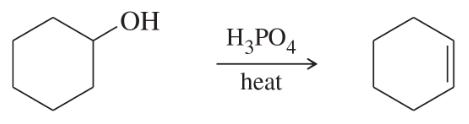
Propose mechanisms for the following reactions. Additional products may be formed, but your mechanism only needs to explain the products shown.
(a)
(Hint: Hydride shift)
Propose mechanisms for the following reactions.
d.
HINT: Alcohol dehydrations usually go through E1 elimination of the protonated alcohol, with a carbocation intermediate. Rearrangements are common.
Propose mechanisms for the following reactions.
(b)
HINT: Alcohol dehydrations usually go through E1 elimination of the protonated alcohol, with a carbocation intermediate. Rearrangements are common.
For practice in recognizing mechanisms, classify each reaction according to the type of mechanism you expect:
1. Free-radical chain reaction
2. Reaction involving strong bases and strong nucleophiles
3. Reaction involving strong acids and strong electrophiles.
(d)
Propose mechanisms for the following reactions. Additional products may be formed, but your mechanism only needs to explain the products shown.
(c)