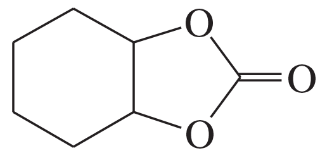
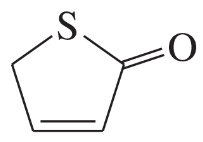
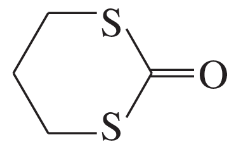
For each heterocyclic compound, (ii) show what compounds would result from complete hydrolysis. (a) (b) (c)
Verified step by step guidance
1
Step 1: Analyze the structure of compound (a), which is phthalic anhydride. Hydrolysis of anhydrides involves breaking the anhydride bond with water, resulting in two carboxylic acid groups. Write the reaction: \( \text{C_6H_4(CO)_2O} + H_2O \rightarrow \text{C_6H_4(COOH)_2} \).
Step 2: Examine compound (b), which is thiophene-2-carboxylic acid. Hydrolysis of thiophene derivatives typically involves breaking the bond between the sulfur atom and the carbonyl group. The product will be thiophene and a carboxylic acid group. Write the reaction: \( \text{C_4H_3S(CO)} + H_2O \rightarrow \text{C_4H_3S} + \text{COOH} \).
Step 3: Look at compound (c), which is a lactam (cyclic amide). Hydrolysis of lactams involves breaking the amide bond with water, resulting in an amine and a carboxylic acid. Write the reaction: \( \text{C_5H_9NO} + H_2O \rightarrow \text{C_5H_{10}NH_2} + \text{COOH} \).
Step 4: For each compound, ensure the hydrolysis reaction is balanced and consistent with the functional groups present in the heterocyclic structure. Verify that water is the reagent breaking the bonds.
Step 5: Summarize the products: (a) phthalic acid, (b) thiophene and carboxylic acid, (c) amine and carboxylic acid. These are the expected results from complete hydrolysis of the given heterocyclic compounds.
Verified video answer for a similar problem:
This video solution was recommended by our tutors as helpful for the problem above
Video duration:
1m
Play a video:
Was this helpful?
Key Concepts
Here are the essential concepts you must grasp in order to answer the question correctly.
Heterocyclic Compounds
Heterocyclic compounds are cyclic structures that contain at least one atom other than carbon in the ring, such as nitrogen, oxygen, or sulfur. These compounds are significant in organic chemistry due to their diverse chemical properties and biological activities. Understanding their structure is crucial for predicting their reactivity, especially during hydrolysis reactions.
Hydrolysis is a chemical reaction involving the breakdown of a compound by water, often catalyzed by an acid or base. In the context of heterocyclic compounds, hydrolysis can lead to the formation of various products, including amines, alcohols, or carboxylic acids, depending on the functional groups present. Recognizing the conditions and mechanisms of hydrolysis is essential for predicting the products formed.
Acid-catalyzed reactions involve the use of an acid to increase the rate of a chemical reaction, often by protonating a reactant to make it more reactive. In the case of ester hydrolysis, the acid catalyst helps to break the ester bond, facilitating the conversion of the ester into its corresponding alcohol and acid. Understanding the role of the acid catalyst is vital for analyzing the reaction pathway and the resulting products.