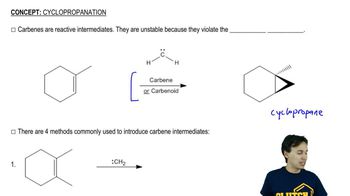
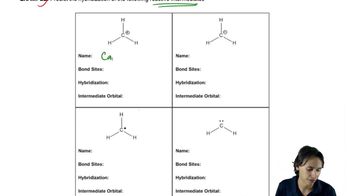
In addition to radicals, anions, and cations, a fourth class of reactive intermediates is carbenes. A neutral species, the simplest carbene has a molecular formula of CH2. (h) Of the reactions studied here in Chapter 8, cyclopropanation is most similar to which?
Verified step by step guidance
1
Carbenes are neutral reactive intermediates with a divalent carbon atom that has two nonbonding electrons. The simplest carbene is methylene (CH₂). Carbenes can participate in various reactions, including cyclopropanation.
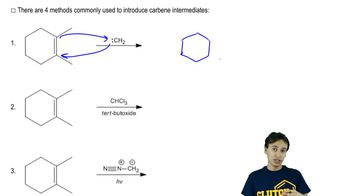
Cyclopropanation is a reaction where a carbene reacts with an alkene to form a cyclopropane ring. This involves the addition of the carbene across the double bond of the alkene.
To determine which reaction cyclopropanation is most similar to, consider the mechanism. Cyclopropanation involves the addition of a species (the carbene) to a double bond, forming a three-membered ring.
Compare this to other reactions studied in Chapter 8. For example, electrophilic addition reactions involve the addition of an electrophile to a double bond, which is conceptually similar to the addition of a carbene to a double bond in cyclopropanation.
Thus, cyclopropanation is most similar to electrophilic addition reactions, as both involve the addition of a reactive species to a double bond, leading to the formation of a new product.
Verified video answer for a similar problem:
This video solution was recommended by our tutors as helpful for the problem above
Play a video:
Was this helpful?
Key Concepts
Here are the essential concepts you must grasp in order to answer the question correctly.
Carbenes
Carbenes are neutral reactive intermediates that contain a carbon atom with only six valence electrons, making them highly reactive. The simplest carbene, methylene (CH₂), can participate in various chemical reactions, including addition to double bonds. Understanding carbenes is crucial for predicting their behavior in organic reactions, particularly in cyclopropanation.
Cyclopropanation is a chemical reaction that involves the formation of a cyclopropane ring by the addition of a carbene to a double bond. This reaction is significant in organic synthesis as it allows for the creation of three-membered rings, which are valuable intermediates in the synthesis of more complex molecules. Recognizing the mechanism of cyclopropanation helps in comparing it to other reactions.
The reactivity of intermediates like carbenes, radicals, anions, and cations is fundamental in organic chemistry. Each type of intermediate has distinct properties and reactivity patterns that influence the course of chemical reactions. Understanding these differences is essential for predicting the outcomes of reactions, including which reactions are similar to cyclopropanation.