What is the specific rotation of an equilibrium mixture of fructose? (Hint: Recall that the specific rotation of an equilibrium mixture of glucose is +52.7.)
Verified step by step guidance
1
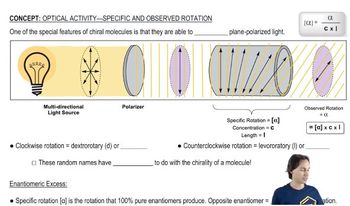
Understand the concept of specific rotation: Specific rotation ([α]) is a physical property that measures the degree to which a chiral compound rotates plane-polarized light. It is defined as [α] = (α_obs) / (l × c), where α_obs is the observed rotation, l is the path length in decimeters, and c is the concentration in g/mL.
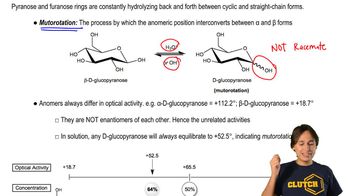
Recall that the specific rotation of an equilibrium mixture is the weighted average of the specific rotations of the individual components in the mixture, based on their relative proportions at equilibrium.
Identify the specific rotation of pure fructose and pure glucose. For glucose, the specific rotation is given as +52.7. You will need to know the specific rotation of pure fructose (commonly -92.4) to proceed.
Determine the equilibrium proportions of glucose and fructose in the mixture. This information is typically provided in the problem or can be derived from equilibrium constants if given.
Calculate the specific rotation of the equilibrium mixture using the formula: [α]_mixture = (fraction_glucose × [α]_glucose) + (fraction_fructose × [α]_fructose). Substitute the known values for the specific rotations and the equilibrium fractions to find the result.
Verified video answer for a similar problem:
This video solution was recommended by our tutors as helpful for the problem above
Video duration:
3m
Play a video:
Was this helpful?
Key Concepts
Here are the essential concepts you must grasp in order to answer the question correctly.
Specific Rotation
Specific rotation is a property of chiral compounds that quantifies the degree to which they rotate plane-polarized light. It is defined as the observed rotation of light at a specific wavelength and temperature, normalized to a concentration of 1 g/mL in a 1 dm path length. This property is crucial for characterizing sugars and other optically active substances.
An equilibrium mixture refers to a state where two or more forms of a compound coexist in a dynamic balance, such as different anomers or stereoisomers of sugars. In the case of fructose, it can exist in various forms, and the specific rotation of the mixture will depend on the proportions of these forms present at equilibrium.
Sugars like fructose and glucose exhibit optical activity due to their chiral centers, which means they can rotate plane-polarized light in different directions. The specific rotation of a sugar solution can vary based on the sugar's structure and the concentration of its different forms, making it essential to understand how these factors influence the overall optical activity in mixtures.