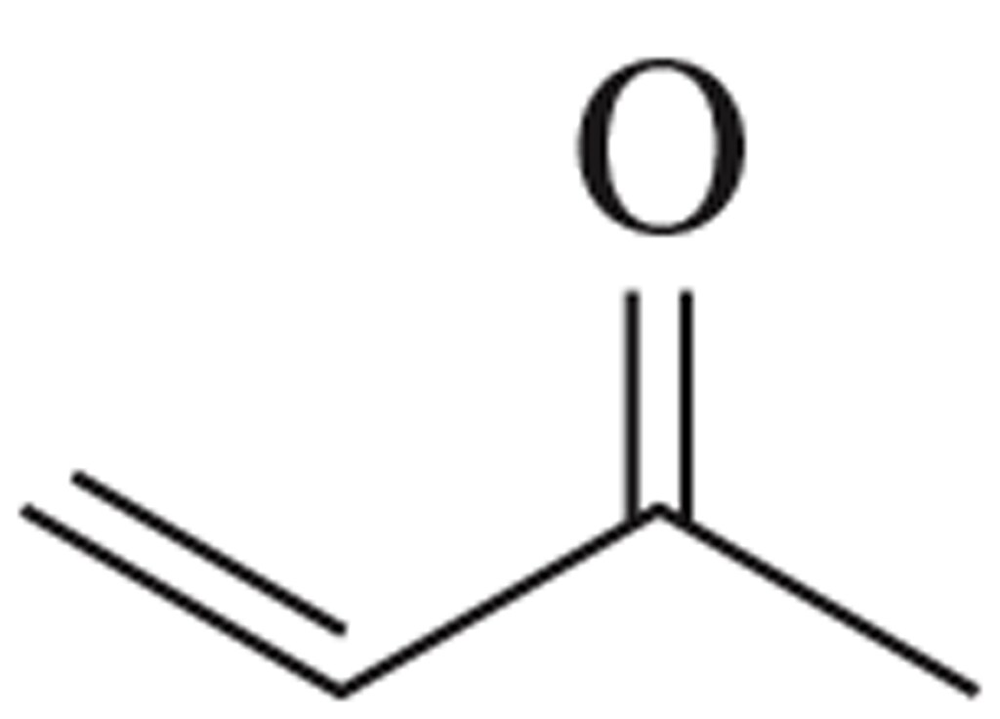
Draw the molecular orbital picture of but-3-en-2-one.
Verified step by step guidance
1
Identify the structure of but-3-en-2-one: This molecule contains a conjugated system with a carbonyl group (C=O) and a C=C double bond. The conjugation arises because the π electrons in the C=C bond and the π electrons in the C=O bond can delocalize over the molecule.
Determine the number of π electrons in the conjugated system: The C=C double bond contributes 2 π electrons, and the C=O double bond also contributes 2 π electrons. Thus, the conjugated system has a total of 4 π electrons.
Construct the molecular orbital (MO) diagram: In a conjugated system with 4 π electrons, there are 2 bonding molecular orbitals (π1 and π2) and 2 antibonding molecular orbitals (π*1 and π*2). The energy levels of these orbitals increase as follows: π1 < π2 < π*1 < π*2.
Populate the molecular orbitals with electrons: The 4 π electrons will fill the molecular orbitals starting from the lowest energy level. Thus, π1 (the lowest energy bonding orbital) will hold 2 electrons, and π2 (the next bonding orbital) will hold the remaining 2 electrons. The antibonding orbitals (π*1 and π*2) will remain unoccupied.
Draw the molecular orbital diagram: Represent the energy levels of the molecular orbitals on the y-axis, with the bonding orbitals (π1 and π2) at lower energy and the antibonding orbitals (π*1 and π*2) at higher energy. Indicate the placement of the 4 π electrons in the bonding orbitals. Additionally, show the delocalization of the π electrons over the conjugated system in the structural representation of but-3-en-2-one.
Verified video answer for a similar problem:
This video solution was recommended by our tutors as helpful for the problem above
Video duration:
4m
Play a video:
Was this helpful?
Key Concepts
Here are the essential concepts you must grasp in order to answer the question correctly.
Molecular Orbitals
Molecular orbitals (MOs) are formed by the combination of atomic orbitals when atoms bond together. They can be classified as bonding, antibonding, or non-bonding orbitals, which influence the stability and reactivity of the molecule. Understanding MOs is crucial for predicting the electronic structure and properties of molecules, including their geometry and energy levels.
But-3-en-2-one, also known as mesityl oxide, is a four-carbon compound with a double bond and a ketone functional group. Its structure includes a carbon-carbon double bond between the second and third carbons and a carbonyl group (C=O) at the second carbon. Recognizing the arrangement of these functional groups is essential for accurately drawing its molecular orbital diagram.
Hybridization is the concept of mixing atomic orbitals to form new hybrid orbitals that can accommodate bonding in molecules. In but-3-en-2-one, the carbon atoms involved in the double bond and the carbonyl group exhibit sp2 hybridization, which allows for the formation of a planar structure and effective overlap of orbitals. Understanding hybridization helps in visualizing the geometry and bonding characteristics of the molecule.