Predict the products you would expect from the reaction of NaBH4 with the following compounds. You may assume that these reactions take place in methanol as the solvent. (e)
Verified step by step guidance
1
Step 1: Identify the functional groups in the given compound. The structure contains three carbonyl groups: one aldehyde (-CHO), one ester (-COOCH3), and one ketone (-C=O).
Step 2: Understand the reactivity of NaBH4. Sodium borohydride (NaBH4) is a reducing agent that selectively reduces aldehydes and ketones to their corresponding alcohols but does not typically reduce esters under standard conditions.
Step 3: Predict the reduction of the aldehyde group. The aldehyde group (-CHO) will be reduced to a primary alcohol (-CH2OH) by NaBH4 in methanol.
Step 4: Predict the reduction of the ketone group. The ketone group (-C=O) will be reduced to a secondary alcohol (-CH(OH)-) by NaBH4 in methanol.
Step 5: Note that the ester group (-COOCH3) will remain unchanged because NaBH4 does not reduce esters under these conditions. The final product will have a primary alcohol, a secondary alcohol, and an intact ester group.
Verified video answer for a similar problem:
This video solution was recommended by our tutors as helpful for the problem above
Video duration:
2m
Play a video:
0 Comments
Key Concepts
Here are the essential concepts you must grasp in order to answer the question correctly.
Sodium Borohydride (NaBH4) as a Reducing Agent
Sodium borohydride (NaBH4) is a mild reducing agent commonly used in organic chemistry to reduce carbonyl compounds, such as aldehydes and ketones, to their corresponding alcohols. It donates hydride ions (H-) to the electrophilic carbon of the carbonyl group, facilitating the reduction process. Understanding its reactivity and selectivity is crucial for predicting the products of reactions involving NaBH4.
The reduction mechanism typically involves the nucleophilic attack of the hydride ion on the carbonyl carbon, followed by protonation of the resulting alkoxide intermediate. This stepwise process leads to the formation of alcohols. Familiarity with this mechanism helps in visualizing how different functional groups will react with NaBH4 and what products will be formed.
The choice of solvent can significantly influence the outcome of organic reactions. In this case, methanol serves as a polar protic solvent that can stabilize charged intermediates and facilitate proton transfer. Understanding the role of the solvent is essential for predicting reaction pathways and product distributions, especially in reduction reactions where solvation can affect reactivity.


 2:43 minutes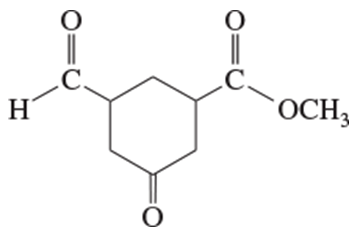
 Verified step by step guidance
 09:28
09:28