Draw the product(s) of each of the following reactions: h. m-xylene + Na2Cr2O7 + HCl + ∆
Verified step by step guidance
1
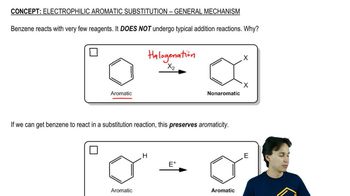
Step 1: For reaction g (ethylbenzene + Br2/FeBr3), recognize that this is an electrophilic aromatic substitution reaction. The FeBr3 acts as a Lewis acid catalyst, helping to generate the bromonium ion (Br⁺) from Br2, which is the electrophile in this reaction.
Step 2: Identify the directing effects of the ethyl group on the benzene ring. The ethyl group is an electron-donating group, which activates the ring and directs substitution to the ortho and para positions relative to itself.
Step 3: Predict the major product of the reaction. Due to steric hindrance, the para position is typically favored over the ortho position. Draw the brominated product at the para position relative to the ethyl group, and optionally include the minor ortho product.
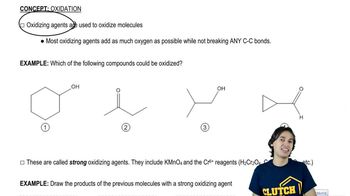
Step 4: For reaction h (m-xylene + Na2Cr2O7 + HCl + ∆), recognize that this is an oxidation reaction. Sodium dichromate (Na2Cr2O7) in acidic conditions (HCl) and heat (∆) is a strong oxidizing agent that converts benzylic positions (positions adjacent to the benzene ring) with at least one hydrogen into carboxylic acids.
Step 5: Analyze the structure of m-xylene. It has two methyl groups attached to the benzene ring in the meta positions. Each methyl group has benzylic hydrogens, so both will be oxidized to carboxylic acids. Draw the product, which is m-phthalic acid (benzene ring with two carboxylic acid groups in the meta positions).
Verified video answer for a similar problem:
This video solution was recommended by our tutors as helpful for the problem above
Play a video:
Was this helpful?
Key Concepts
Here are the essential concepts you must grasp in order to answer the question correctly.
Electrophilic Aromatic Substitution
Electrophilic aromatic substitution (EAS) is a fundamental reaction mechanism in organic chemistry where an electrophile replaces a hydrogen atom on an aromatic ring. In the case of ethylbenzene reacting with Br2 in the presence of FeBr3, the bromine acts as the electrophile, leading to the substitution of a hydrogen atom on the benzene ring, resulting in brominated products.
The oxidation of aromatic compounds involves the addition of oxygen or the removal of hydrogen, often resulting in the formation of carboxylic acids or ketones. In the reaction of m-xylene with Na2Cr2O7 and HCl, the m-xylene undergoes oxidation, which can lead to the formation of phthalic acid or other oxidized products, depending on the reaction conditions.
Understanding the role of reagents and reaction conditions is crucial in organic reactions. In the provided reactions, FeBr3 serves as a catalyst for the bromination of ethylbenzene, while Na2Cr2O7 is a strong oxidizing agent that facilitates the oxidation of m-xylene. The presence of HCl and heat (∆) further influences the reaction pathway and product formation.