Textbook Question
Esters with only one α hydrogen generally give poor yields in the Claisen condensation. Propose a mechanism for the Claisen condensation of ethyl isobutyrate, and explain why a poor yield is obtained.
1173
views

 Wade 9th EditionCh. 22 - Condensations and Alpha Substitutions of Carbonyl CompoundsProblem 33a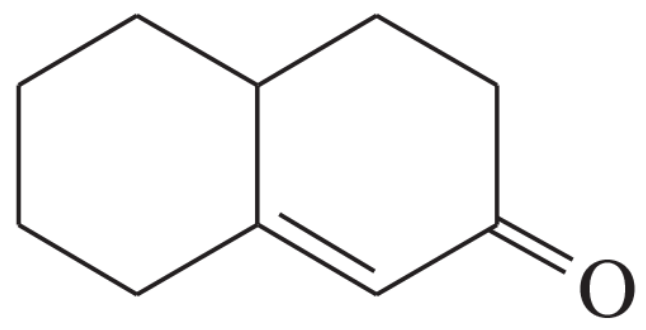
 Verified step by step guidance
 09:51
09:51
 12:58
12:58 05:52
05:52Esters with only one α hydrogen generally give poor yields in the Claisen condensation. Propose a mechanism for the Claisen condensation of ethyl isobutyrate, and explain why a poor yield is obtained.
The following compound results from base-catalyzed aldol cyclization of a 2-substituted cyclohexanone.
(b) Propose a mechanism for the cyclization.
Ethoxide is used as the base in the condensation of ethyl acetate to avoid some unwanted side reactions. Show what side reactions would occur if the following bases were used.
(a) sodium methoxide
(b) sodium hydroxide
Show how each compound can be dissected into reagents joined by an aldol condensation, then decide whether the necessary aldol condensation is feasible.
(e)
Show how each compound can be dissected into reagents joined by an aldol condensation, then decide whether the necessary aldol condensation is feasible.
(b)
Show how each compound can be dissected into reagents joined by an aldol condensation, then decide whether the necessary aldol condensation is feasible.
(c)