Textbook Question
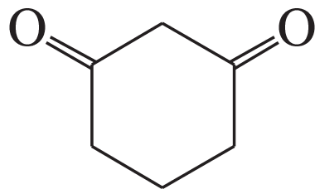
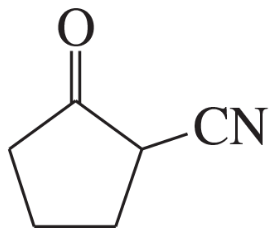
For each molecule shown below,
1. indicate the most acidic hydrogens.
2. draw the important resonance contributors of the anion that results from removal of the most acidic hydrogen.
(e)
567
views

 Wade 9th EditionCh. 22 - Condensations and Alpha Substitutions of Carbonyl CompoundsProblem 60a,b,c(2)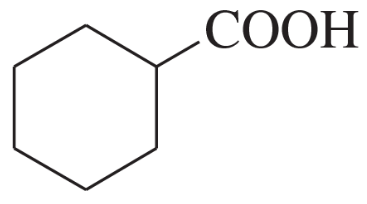
 Verified step by step guidance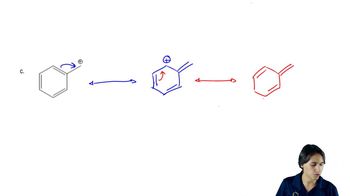
 03:04
03:04
 07:45
07:45 0:53
0:53For each molecule shown below,
1. indicate the most acidic hydrogens.
2. draw the important resonance contributors of the anion that results from removal of the most acidic hydrogen.
(e)
Show how you would use Robinson annulations to synthesize the following compounds. Work backward, remembering that the cyclohexenone is the new ring and that the double bond of the cyclohexenone is formed by the aldol with dehydration. Take apart the double bond, then see what structures the Michael donor and acceptor must have.
(a)
For each molecule shown below,
1. indicate the most acidic hydrogens.
(a)
(b)
(c)
The base-catalyzed reaction of an aldehyde (having no α hydrogens) with an anhydride is called the Perkin condensation. Propose a mechanism for the following example of the Perkin condensation. (Sodium acetate serves as the base.)
Show how you would use Robinson annulations to synthesize the following compounds. Work backward, remembering that the cyclohexenone is the new ring and that the double bond of the cyclohexenone is formed by the aldol with dehydration. Take apart the double bond, then see what structures the Michael donor and acceptor must have.
(b)
For each molecule shown below,
1. indicate the most acidic hydrogens.
2. draw the important resonance contributors of the anion that results from removal of the most acidic hydrogen.
(d)