Show how each compound can be dissected into reagents joined by an aldol condensation, then decide whether the necessary aldol condensation is feasible. (e)
Verified step by step guidance
1
Step 1: Analyze the given compound structure. The compound contains a ketone functional group (C=O) and an α,β-unsaturated system (double bond adjacent to the carbonyl group). This suggests that the compound could be formed via an aldol condensation reaction.
Step 2: Identify the two fragments that could combine to form the given compound. In an aldol condensation, one fragment acts as the enolate ion (nucleophile) and the other as the electrophile (carbonyl compound). Here, the enolate ion would likely form from the methyl ketone group (CH3CO-) and the electrophile would be cyclohexanone.
Step 3: Write the retrosynthetic disconnection. Break the compound at the α,β-unsaturated bond to identify the two starting materials. The disconnection suggests that the compound can be formed by the reaction of cyclohexanone and acetone (CH3COCH3).
Step 4: Assess the feasibility of the aldol condensation. Cyclohexanone can form an enolate ion under basic conditions, and acetone can act as the electrophile. The reaction is feasible because both components are reactive under typical aldol condensation conditions.
Step 5: Summarize the reaction mechanism. Under basic conditions, cyclohexanone forms an enolate ion, which attacks the carbonyl carbon of acetone. This forms a β-hydroxyketone intermediate, which then undergoes dehydration to yield the α,β-unsaturated ketone product shown in the image.
Verified video answer for a similar problem:
This video solution was recommended by our tutors as helpful for the problem above
Video duration:
7m
Play a video:
0 Comments
Key Concepts
Here are the essential concepts you must grasp in order to answer the question correctly.
Aldol Condensation
Aldol condensation is a reaction between aldehydes or ketones that contain alpha-hydrogens, leading to the formation of β-hydroxy aldehydes or ketones. This reaction involves the nucleophilic addition of an enolate ion to a carbonyl compound, followed by dehydration to yield an α,β-unsaturated carbonyl compound. Understanding this process is crucial for dissecting compounds into their respective reagents.
Enolate ions are formed when a base abstracts an alpha-hydrogen from a carbonyl compound, resulting in a resonance-stabilized anion. This ion acts as a nucleophile in aldol reactions, allowing it to attack another carbonyl carbon. Recognizing how enolate ions are generated and their role in aldol condensation is essential for analyzing the feasibility of the reaction.
Intramolecular aldol condensation occurs when the aldehyde or ketone reacts with itself within the same molecule, forming a cyclic compound. This process is often favored due to the stability of the resulting ring structure. Identifying whether a compound can undergo intramolecular aldol condensation is key to determining the feasibility of the reaction presented in the question.


 7:07 minutes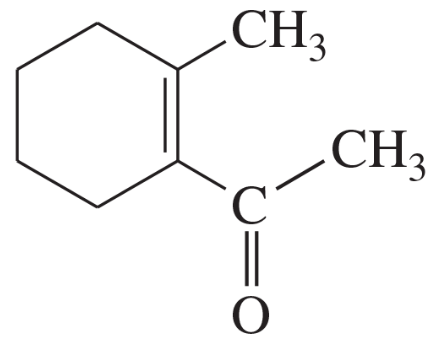
 Verified step by step guidance
 09:51
09:51