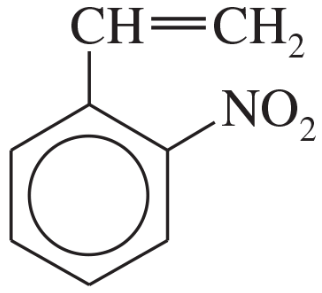
Step 1: Analyze the structure in (i). The compound contains a benzene ring with two substituents: a nitro group (-NO₂) and a propenyl group (-CH=CH₂). The substituents are located at positions 1 and 3 relative to each other. The nitro group is given priority in naming due to its higher precedence.
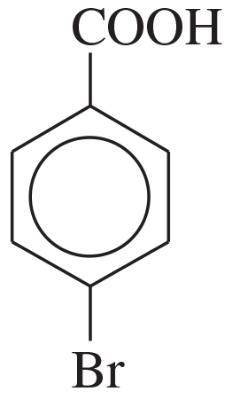
Step 2: For structure (ii), identify the substituents on the benzene ring. The compound has a carboxylic acid group (-COOH) and a bromine atom (-Br). The carboxylic acid group takes priority in naming, and the bromine atom is assigned the lowest possible position number.
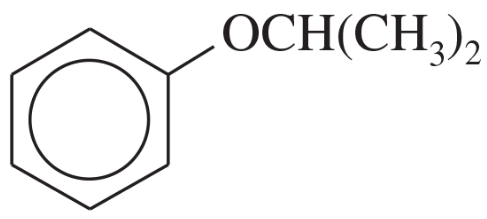
Step 3: For structure (iii), observe the substituent on the benzene ring. The compound has a methoxyethyl group (-OCH₂CH₃) attached to the ring. The substituent is named as an alkoxy group, and the position on the benzene ring is specified.
Step 4: Apply IUPAC naming rules to each structure. For (i), prioritize the nitro group and name the compound as a derivative of nitrobenzene. For (ii), prioritize the carboxylic acid group and name the compound as a derivative of benzoic acid. For (iii), name the compound as a derivative of benzene with the alkoxy group.
Step 5: Combine the substituent names with the parent benzene ring name, ensuring correct numbering and precedence. Verify that the names follow IUPAC conventions and accurately describe the structures provided.
Verified video answer for a similar problem:
This video solution was recommended by our tutors as helpful for the problem above
Video duration:
5m
Play a video:
Was this helpful?
Key Concepts
Here are the essential concepts you must grasp in order to answer the question correctly.
Nomenclature of Aromatic Compounds
The nomenclature of aromatic compounds follows specific rules set by the International Union of Pure and Applied Chemistry (IUPAC). This includes identifying the parent benzene ring and naming substituents based on their position (ortho, meta, or para) relative to each other. Understanding these conventions is crucial for accurately naming complex aromatic structures.
Substituent Effects
Substituents on a benzene ring can influence the reactivity and properties of the compound. They can be classified as electron-donating or electron-withdrawing groups, affecting the ring's electron density and directing the site of further substitution. Recognizing these effects is essential for predicting the behavior of aromatic compounds in chemical reactions.
Functional Groups
Functional groups are specific groups of atoms within molecules that are responsible for the characteristic chemical reactions of those molecules. In the context of the provided compounds, groups like -NO2 (nitro), -COOH (carboxylic acid), and -Br (bromo) play significant roles in determining the compound's reactivity and properties. Identifying these groups is key to understanding the overall behavior of the aromatic compounds.