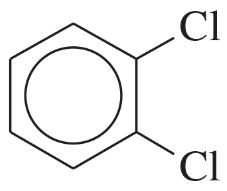
Step 1: Analyze the structure in (i). The compound is a benzene ring with two chlorine atoms attached. Determine the positions of the substituents and name the compound based on the IUPAC rules for disubstituted benzene derivatives. If the substituents are in the 1,2-positions, the prefix 'ortho-' is used; for 1,3-positions, 'meta-' is used; and for 1,4-positions, 'para-' is used.
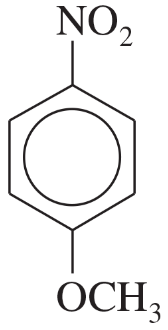
Step 2: Analyze the structure in (ii). The compound is a benzene ring with a nitro group (-NO₂) and a methoxy group (-OCH₃) attached. Determine the relative positions of the substituents and name the compound using the IUPAC rules for naming benzene derivatives. The nitro group is typically given priority in naming.
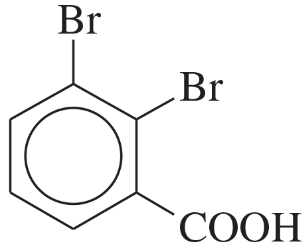
Step 3: Analyze the structure in (iii). The compound is a benzene ring with two bromine atoms and a carboxylic acid group (-COOH) attached. The carboxylic acid group takes priority in naming, and the positions of the bromine atoms relative to the carboxylic acid group must be determined.
Step 4: For each compound, ensure that the substituents are numbered correctly to give the lowest possible numbers to the substituents, following IUPAC rules. Verify that the names reflect the correct positions and priorities of the substituents.
Step 5: Write the final names for each compound based on the analysis above, ensuring that the names are consistent with IUPAC nomenclature for aromatic compounds.
Verified video answer for a similar problem:
This video solution was recommended by our tutors as helpful for the problem above
Video duration:
10m
Play a video:
Was this helpful?
Key Concepts
Here are the essential concepts you must grasp in order to answer the question correctly.
Nomenclature of Aromatic Compounds
Aromatic compounds, such as benzene derivatives, follow specific naming conventions established by IUPAC. The base name is derived from the parent aromatic compound, with substituents indicated by prefixes. The position of substituents is denoted by numbers or letters (ortho, meta, para) based on their relative positions on the benzene ring.
Substituent Effects
Substituents on a benzene ring can influence the reactivity and orientation of further substitutions due to their electronic effects. Electron-donating groups (EDGs) such as -OCH3 activate the ring towards electrophilic substitution, while electron-withdrawing groups (EWGs) like -NO2 deactivate it and direct incoming substituents to specific positions on the ring.
Ortho, Meta, and Para Positions
The terms ortho, meta, and para describe the relative positions of substituents on a benzene ring. Ortho refers to substituents on adjacent carbons, meta to those separated by one carbon, and para to those opposite each other. Understanding these positions is crucial for correctly naming compounds and predicting their chemical behavior.