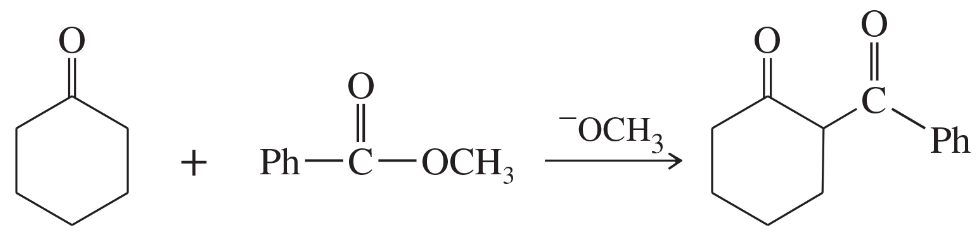
Propose mechanisms for the following reactions. (b)
Verified step by step guidance
1
Identify the type of reaction taking place (e.g., substitution, elimination, addition, etc.) by analyzing the reactants and products. Look for functional group changes or rearrangements.
Determine the reactive sites in the molecule. For example, locate electrophilic and nucleophilic centers based on the structure of the reactants.
Propose the first step of the mechanism, which often involves the formation of an intermediate. For example, in a nucleophilic substitution, the nucleophile attacks the electrophile, leading to bond formation and/or bond cleavage.
Continue the mechanism by considering subsequent steps, such as rearrangements, proton transfers, or elimination of leaving groups, to form intermediates or the final product.
Verify the proposed mechanism by ensuring that it follows the principles of organic chemistry, such as charge conservation, proper electron flow (using curved arrows), and consistency with the observed product.
Verified video answer for a similar problem:
This video solution was recommended by our tutors as helpful for the problem above
Play a video:
Was this helpful?
Key Concepts
Here are the essential concepts you must grasp in order to answer the question correctly.
Reaction Mechanisms
A reaction mechanism is a step-by-step description of the process by which reactants transform into products. It outlines the individual steps, including bond breaking and formation, and the intermediates formed during the reaction. Understanding mechanisms is crucial for predicting the outcome of reactions and for designing new synthetic pathways.
Organic reactions can be classified into several types, including substitution, addition, elimination, and rearrangement reactions. Each type has distinct characteristics and mechanisms. Recognizing the type of reaction helps in predicting the behavior of reactants and the nature of the products formed.
Curved arrow notation is a visual representation used in organic chemistry to depict the movement of electrons during chemical reactions. Arrows indicate the direction of electron flow, showing how bonds are broken and formed. Mastery of this notation is essential for accurately illustrating and understanding reaction mechanisms.