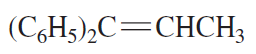
What is the best set of reagents to use for the synthesis? 2.
Verified step by step guidance
1
Analyze the target molecule provided in the image. The structure contains a double bond in the middle of a branched alkyl chain, indicating that an elimination reaction might be involved in the synthesis.
Determine the starting material. To synthesize this molecule, a suitable alkyl halide precursor with the correct branching pattern is required. The halide should be positioned on the carbon adjacent to the double bond in the target molecule.
Choose the elimination reaction type. Since the molecule has a highly substituted double bond, a strong base is likely required to favor the E2 elimination mechanism, which is ideal for forming a double bond in a single step.
Select the reagents. A strong base such as potassium tert-butoxide (KOtBu) can be used to promote the E2 elimination. The solvent should be non-protic and polar, such as tert-butanol, to support the reaction conditions.
Verify the stereochemistry and regiochemistry. Ensure that the elimination reaction follows Zaitsev's rule, favoring the formation of the more substituted alkene as the major product, which matches the target molecule.
Verified video answer for a similar problem:
This video solution was recommended by our tutors as helpful for the problem above
Video duration:
3m
Play a video:
Was this helpful?
Key Concepts
Here are the essential concepts you must grasp in order to answer the question correctly.
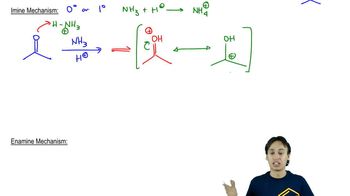
Imine Formation
Imine formation is a key reaction in organic chemistry where a carbonyl compound (usually an aldehyde or ketone) reacts with an amine to form an imine. This reaction involves the nucleophilic attack of the amine on the carbonyl carbon, followed by dehydration to eliminate water. Imines are important intermediates in various synthetic pathways, particularly in the synthesis of more complex organic molecules.
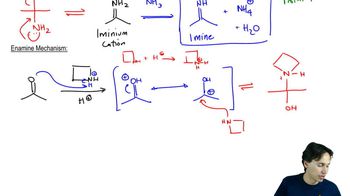
Enamines are formed when a carbonyl compound reacts with a secondary amine. The reaction involves the nucleophilic attack of the amine on the carbonyl carbon, leading to the formation of an intermediate that undergoes dehydration. Enamines are valuable intermediates in organic synthesis, as they can participate in various reactions, including alkylation and acylation, to form more complex structures.
Choosing the right reagents is crucial in organic synthesis to achieve the desired transformation efficiently. Factors to consider include the reactivity of the starting materials, the desired product, and the reaction conditions. Common reagents for imine and enamine synthesis include aldehydes or ketones, amines, and sometimes catalysts or dehydrating agents to facilitate the reaction. Understanding the mechanisms and conditions of these reactions helps in selecting the optimal reagents.