The following are all substitution reactions, two of which we study in later chapters. With no knowledge of mechanism, what would you expect the ratio of products to be for each reaction, based on a random statistical distribution? (a) Replacing a hydrogen (H) with deuterium (D):
Verified step by step guidance
1
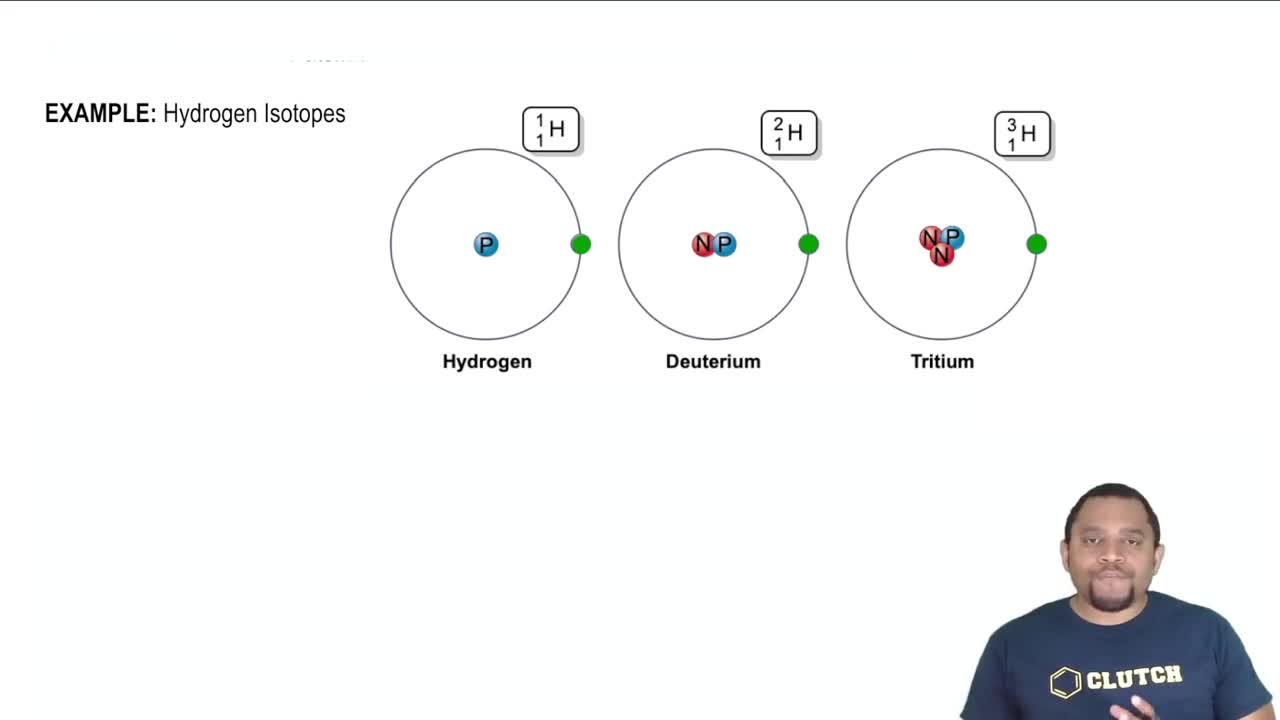
Understand the concept of substitution reactions: In this problem, we are replacing a hydrogen atom (H) with a deuterium atom (D). Deuterium is an isotope of hydrogen, meaning it has the same chemical properties but a different mass due to an additional neutron.
Identify the number of hydrogens available for substitution: Count the total number of hydrogen atoms in the molecule that can be replaced by deuterium. This will help determine the statistical distribution of products.
Consider the statistical probability: Since the substitution is random and there is no preference for one hydrogen over another, the ratio of products will depend on the number of hydrogens available for substitution. For example, if there are 4 hydrogens, each hydrogen has an equal probability of being replaced by deuterium.
Calculate the ratio of products: The ratio of products will be proportional to the number of hydrogens available for substitution. For instance, if there are 4 hydrogens, the statistical ratio of products would be 1:1:1:1 for each possible substitution site.
Summarize the reasoning: The ratio of products is based purely on the statistical likelihood of substitution at each hydrogen position, assuming no other factors (such as steric hindrance or electronic effects) influence the reaction.
Verified video answer for a similar problem:
This video solution was recommended by our tutors as helpful for the problem above
Video duration:
1m
Play a video:
0 Comments
Key Concepts
Here are the essential concepts you must grasp in order to answer the question correctly.
Substitution Reactions
Substitution reactions are a fundamental type of chemical reaction where one atom or group of atoms in a molecule is replaced by another atom or group. In organic chemistry, these reactions often involve the replacement of a functional group, such as a hydrogen atom, with another atom or group, like deuterium. Understanding the nature of these reactions is crucial for predicting product ratios.
In the context of substitution reactions, a statistical distribution refers to the likelihood of different products forming based on the number of available sites for substitution. When considering a reaction where a hydrogen atom is replaced by deuterium, the expectation of product ratios can be derived from the relative abundance of the reactants and the probability of substitution occurring at each site.
Isotope effects occur when the presence of different isotopes of an element, such as hydrogen (H) and deuterium (D), influences the rate or outcome of a chemical reaction. In substitution reactions, the heavier isotope (D) can lead to different reaction kinetics compared to H, affecting the product distribution. This concept is essential for understanding how isotopic substitution can alter reaction pathways and product ratios.


 1:48 minutes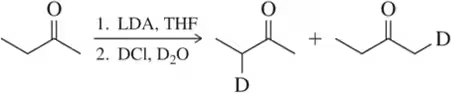
 Verified step by step guidance
 01:34
01:34