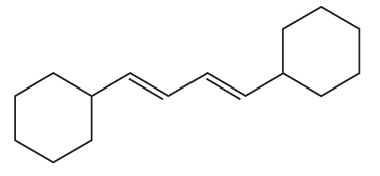
Using ethynylcyclohexane as a starting material and any other needed reagents, how can the following compounds be synthesized? a.
Verified step by step guidance
1
Analyze the structure of ethynylcyclohexane. It consists of a cyclohexane ring with an ethynyl group (-C≡CH) attached. The triple bond in the ethynyl group is a key functional group that can undergo various reactions.
Determine the target compound's structure (not provided in the problem). Identify the functional groups and connectivity in the target molecule to understand the transformations required.
Plan the retrosynthetic analysis. Break down the target compound into simpler precursors, considering the reactivity of the ethynyl group. For example, the triple bond can undergo reactions such as nucleophilic addition, reduction, or substitution.
Select appropriate reagents and conditions for each step of the synthesis. For example, if the target compound requires a double bond, partial reduction of the triple bond using Lindlar's catalyst can be employed. If a longer carbon chain is needed, alkylation of the terminal alkyne using a strong base (e.g., NaNH₂) followed by an alkyl halide can be performed.
Outline the step-by-step synthetic pathway, ensuring that each intermediate is stable and the reagents used are compatible with the functional groups present. Verify that the final product matches the target compound.
Verified video answer for a similar problem:
This video solution was recommended by our tutors as helpful for the problem above
Video duration:
6m
Play a video:
Was this helpful?
Key Concepts
Here are the essential concepts you must grasp in order to answer the question correctly.
Alkyne Reactivity
Ethynylcyclohexane contains a terminal alkyne, which is highly reactive and can undergo various reactions such as nucleophilic addition, hydrogenation, and coupling reactions. Understanding the reactivity of alkynes is crucial for determining the pathways to synthesize desired compounds from this starting material.
Cyclohexane derivatives, like ethynylcyclohexane, can participate in reactions that modify their ring structure or functional groups. Familiarity with the properties and reactivity of cyclohexane derivatives helps in predicting how to manipulate the starting material to achieve the target compounds.
Synthetic pathways refer to the series of chemical reactions and transformations used to convert a starting material into a desired product. Knowledge of various synthetic strategies, including functional group transformations and coupling reactions, is essential for designing an effective synthesis route from ethynylcyclohexane to the target compounds.